Plakoto Rules — Greek Pinning Backgammon
How to play Plakoto: starting position, pinning, the closed gate, bearing off, and key differences from Portes.
Play now PlakotoHow to play Plakoto: starting position, pinning, the closed gate, bearing off, and key differences from Portes.
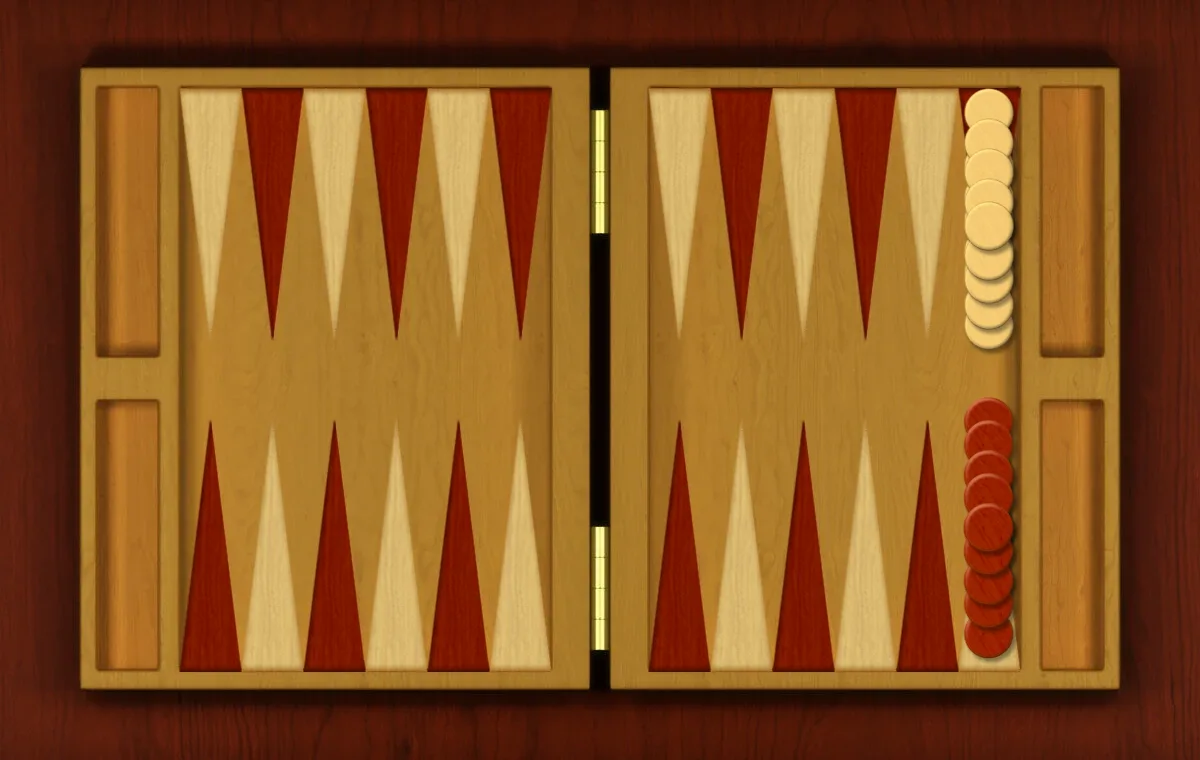
Play now PlakotoIn Plakoto all of each player's checkers start stacked on the opponent's home point. From there they move toward their own home board.
There is no bar and no hitting as in Portes. The core idea is pinning: you trap an opponent's checker by landing on top of it.
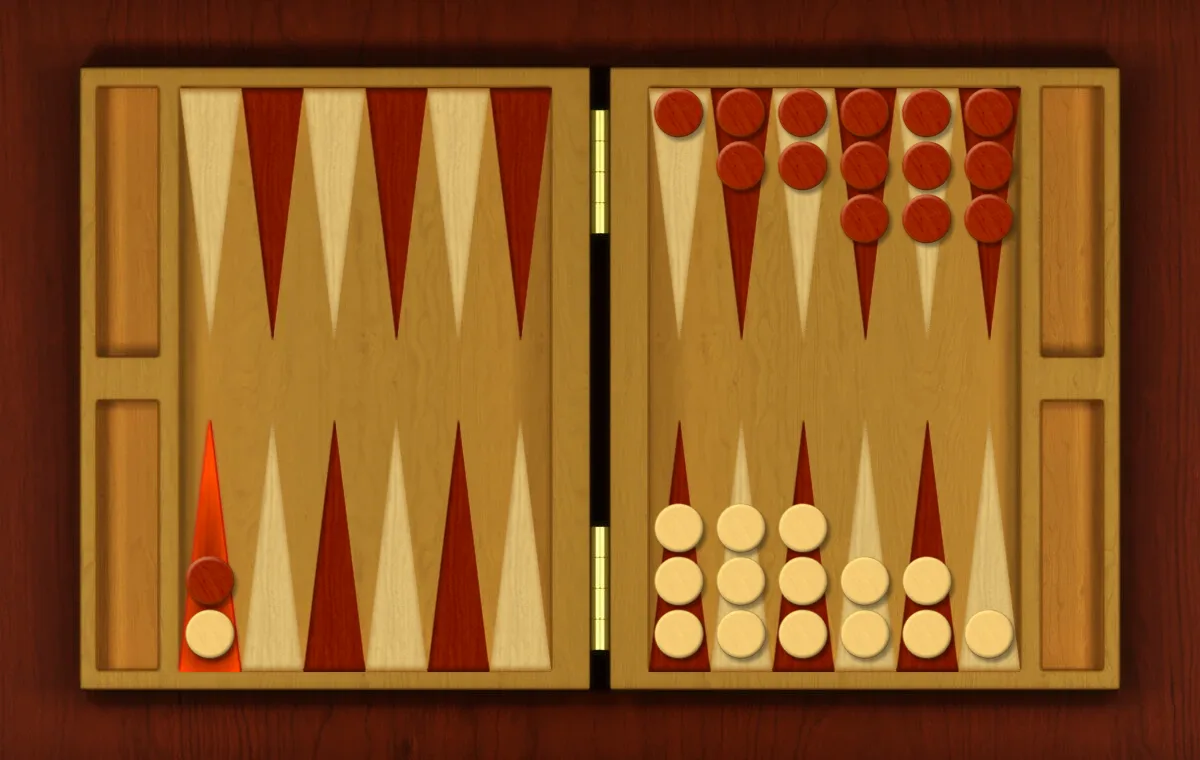
If you land on a lone opponent checker, you pin it. The opponent's checker cannot move until you leave that point.
This makes Plakoto more patient and strategic. A well-placed pin can hold the opponent back for many turns.
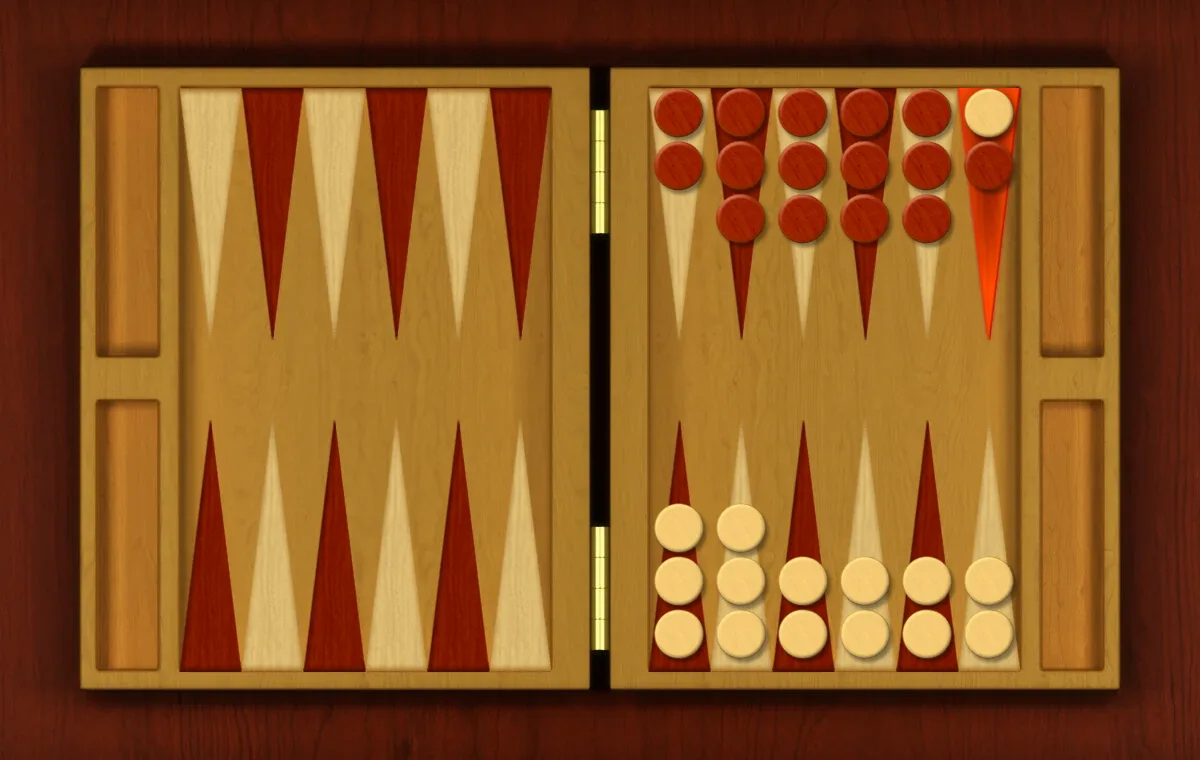
The most critical point is your home point (starting point). If the opponent pins the last checker left there, you typically lose immediately or concede a gammon, depending on house rules.
That's why experienced players never abandon their home point carelessly. They keep cover until the danger has passed.
In Plakoto the power is not only in pinning but in knowing when to release. Free the opponent too early and you let them right back into the game.
Play with the goal of keeping the opponent blocked while advancing your own checkers toward the bear-off. A pin early in the opponent's journey (points 20–24 from your perspective) is worth more than one near your own bear-off area.
Since all checkers start stacked, the first moves are critical for how quickly you develop. The goal is to "open" your stack and distribute checkers to different points.
Avoid keeping many checkers stacked on one point while others remain empty. Every checker left in the stack is one that neither pins nor blocks. By mid-game you want checkers on at least 5–6 different points.
Pinning your own starting point (point 1) is the most dangerous weakness. If the opponent pins your last checker there, the game is usually over.
The decision to leave a pinned checker is one of the hardest in Plakoto. Leave too early and the opponent is freed. Stay too long and you risk falling behind.
General rule: release a pin when you already have enough advanced checkers that will bear off before the freed opponent checker can catch up. If the pinned checker is near your home board (points 1–6), it may be worth holding until you start bearing off.
If you have multiple pins simultaneously, prioritise the ones farthest back. A pin on point 22 keeps the opponent back much longer than one on point 6.
In Plakoto there is no hitting: instead of sending checkers to the bar, you pin them in place. Also, all checkers start stacked on point 1, not spread out as in Portes.
If the opponent pins the last checker on your starting point (point 1), you typically suffer a gammon or lose immediately, depending on your house rules. This is why protecting point 1 is a priority.
Yes. You can have multiple active pins simultaneously. Any point where you have one of your checkers on top of a lone opponent checker is an active pin.
Try what you just read in a real game, solo or online with a friend, straight in your browser.
Start a gameWant the full picture first? The Plakoto tavli page has rules, strategy and FAQ in one place. Or play tavli online in any variant you prefer.