Plakoto Strategy — Pinning & the Mother Point
Plakoto tavli strategy guide: when a pin is worth it, how to guard your mother point, when to release, and how to use doubles to win more often.
Play now PlakotoPlakoto tavli strategy guide: when a pin is worth it, how to guard your mother point, when to release, and how to use doubles to win more often.
Play now PlakotoIn Plakoto you start with 15 checkers in one stack, and a stack is inertia. Every roll that does not open a new point is lost tempo. In the first 4-5 rolls aim to occupy at least 4 different points.
Priority goes to the points you may later need for pins: the opponent's exit quadrant (points 19-24 from your perspective) and the middle of the board. A checker that arrives there early becomes a standing pin threat.
Don't fear blots while the opponent is still stacked. To pin you they must first reach you, and early in the game they rarely have checkers in the right places.
The most important defensive principle in Plakoto: never leave your home point with a single checker while the opponent can still reach it. A pinned mother point almost always means a lost game, usually a gammon. Ask anyone who has played for years: most stories about lost Plakoto games end with a home point left uncovered "for just one roll".
Practical rule: count the opponent's checkers that are 1-12 points before your home point. While even one remains, keep two of your checkers on it. Only when the last opposing checker has passed is your home point permanently safe and its checkers free to leave.
The same applies in reverse: the opponent's home point is your biggest target. If a lone checker remains there, pinning it wins the game on the spot. It is worth wasting an otherwise bad roll to keep that threat alive.
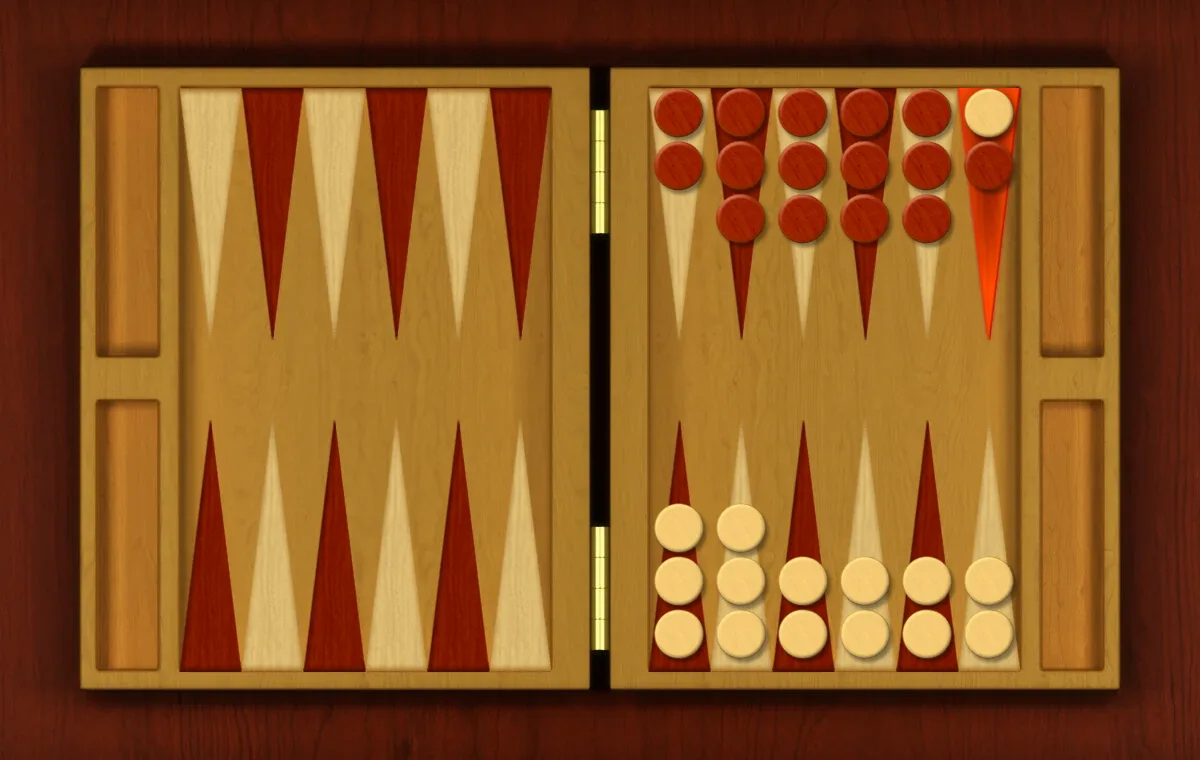
Not all pins are equal. A pin's value depends on how far the trapped checker still has to travel: a pin in the opponent's starting quadrant (your points 19-24) costs them 20+ points of travel and often the whole game.
By contrast, a pin next to your own home board traps a checker that had nearly finished its journey anyway. A small gain, and it ties up a checker you will want for the bear-off.
Remember that your pinning checker "works" while it sits there: it holds the opponent back without needing another roll. Two or three well-placed simultaneous pins can paralyse half the opponent's board.
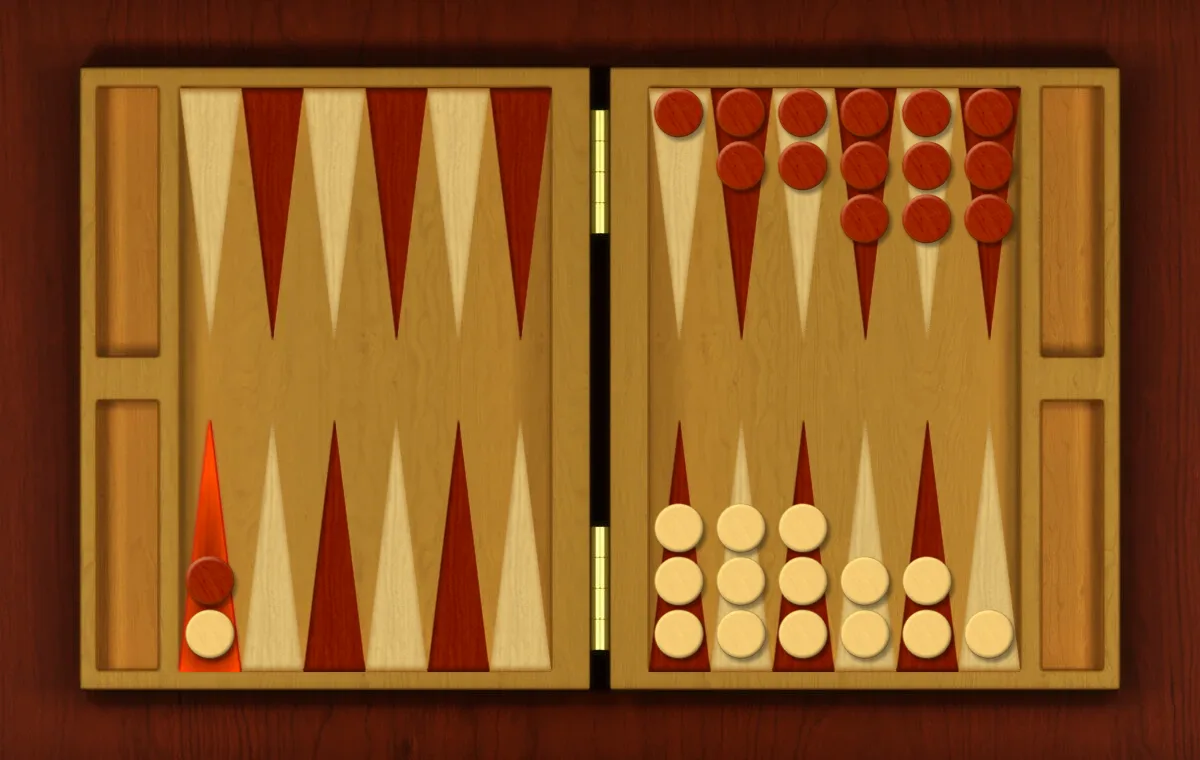
A pin is not forever. At some point your checker must continue toward the bear-off, and the question is when. The core criterion is the race: if after releasing the opponent checker you remain clearly ahead in the pip count, leave without fear.
If the race is close, hold the pin and advance your other checkers first. Every roll you play elsewhere while the opponent stays stuck grows your lead for free.
With multiple pins, release the most forward one first (closest to your home board) and hold the rearmost until last: that one costs the opponent the most.
In Plakoto, doubles (4 moves) are your chance to do what a normal roll cannot: open the stack AND cover a threat, or set up two pins in a single turn.
Before playing doubles automatically, check three things in order: (1) can you pin an opponent checker? (2) is your home point threatened and in need of cover? (3) can you escape from a looming pin? Only if the answer is no to all three should you play doubles as plain development.
In Plakoto you cannot bear off while one of your checkers is still pinned: all 15 must reach your home board. Your own trapped checkers become a countdown clock. Every roll that passes without freeing them, the opponent bears off.
If one of your checkers is pinned deep in the opponent's territory, don't race the rest to the bear-off as if nothing is wrong. Count realistically: if the trapped checker cannot make it in time, your goal is no longer winning but avoiding the gammon. Bear off at least one checker as soon as possible.
In the bear-off itself the Portes principle applies: spread checkers evenly across points 1-6 instead of stacking the 6-point, so every roll removes a checker.
1. Playing Plakoto like Portes: looking for 'hits' and racing instead of controlling points. Plakoto is won with patience and traps, not speed.
2. Stripping your home point one roll earlier than necessary. If even one opposing checker can still reach it, the risk is almost never worth it.
3. Pinning everything in sight. A pin next to your own home board ties up your checker for a trivial gain, and that is often exactly the checker you will miss in the bear-off.
4. Forgetting your own exposed checkers. Every blot on a point the opponent passes is a pin candidate, and your trapped checker can never be freed by your own move.
Open your stack quickly, guard your home point with two checkers while it is threatened, and prefer pins deep in the opponent's territory: that is where they cost the most.
When you are clearly ahead in the race even after the release, or when the checker is needed for your bear-off. With multiple pins, release the rearmost last.
Keep two checkers on it until the last opposing checker that can reach it has passed. Only then is it safe to move them on.
It has less luck: there is no hitting and no bar re-entry, so positional mistakes stay on the board. The more careful player wins more consistently.
Try what you just read in a real game, solo or online with a friend, straight in your browser.
Start a gameWant the full picture first? The Plakoto tavli page has rules, strategy and FAQ in one place. Or play tavli online in any variant you prefer.