Portes Tavli Rules: Hitting, Bearing Off, Gammon
All the rules of Portes (Greek backgammon) step by step: hitting and the bar, forced moves, impossible rolls, bearing off, gammon and scoring — with real board diagrams.
Play now PortesAll the rules of Portes (Greek backgammon) step by step: hitting and the bar, forced moves, impossible rolls, bearing off, gammon and scoring — with real board diagrams.
Play now PortesThis guide covers Portes rules and setup. To play Portes tavli online now, tap "Start a game" at the bottom of the page.
The Portes setup is the classic backgammon arrangement: each player starts with 15 checkers on 4 points. 2 on the 24-point, 5 on the 13-point, 3 on the 8-point, and 5 on the 6-point. The two players set up symmetrically and move in opposite directions.
The starting position is designed for immediate tension: you have checkers forward for attack but also stragglers in the back that need to reach home safely.
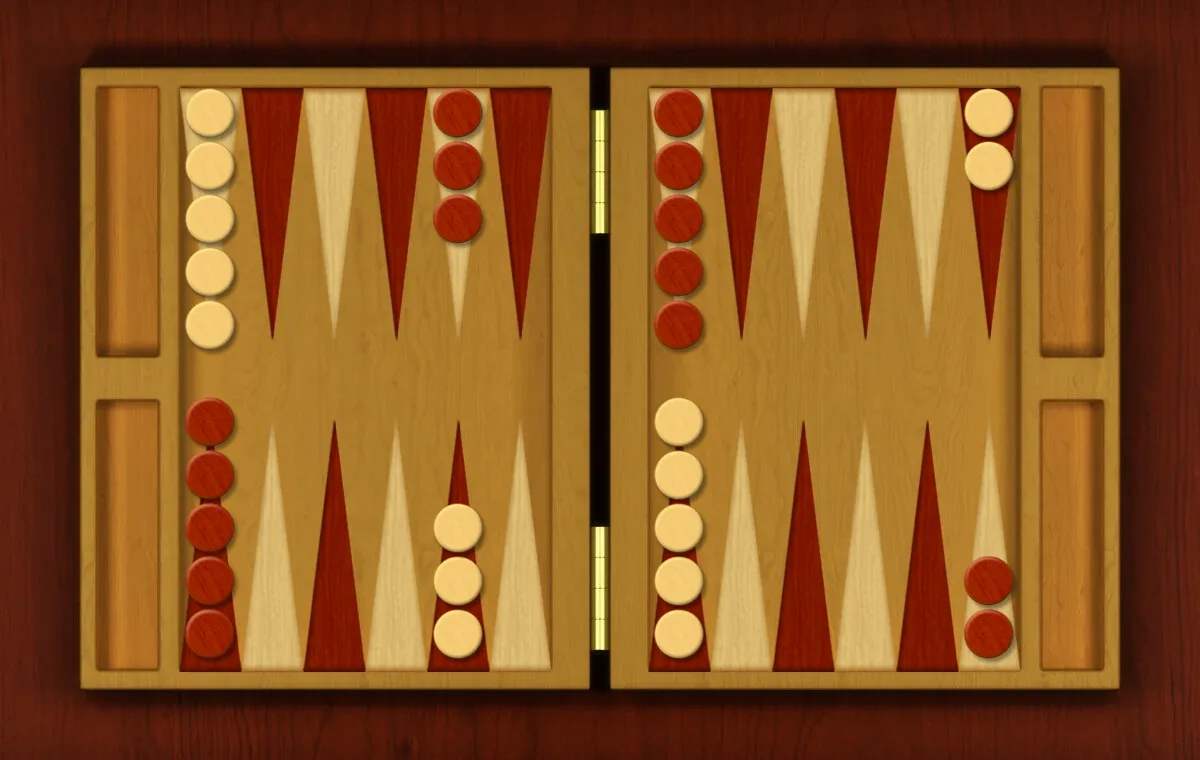
A checker standing alone on a point is a blot. Your opponent can land on it, hit it, and send it to the bar.
While you have a checker on the bar you must re-enter it on the opponent's side of the board before making any other move. If all those points are closed, you forfeit your turn.
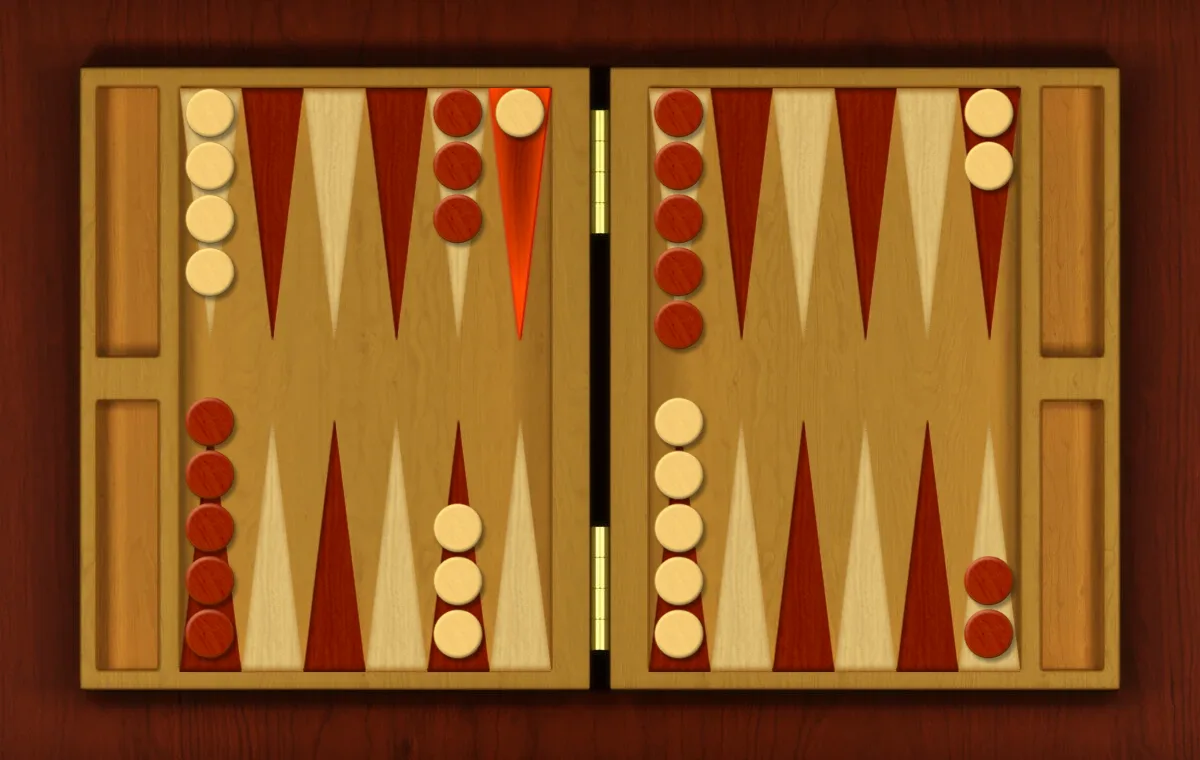
You can only start bearing off once all your checkers are in the last quadrant (your home board). From there, each die removes a checker from the corresponding point.
If you get hit while bearing off, you stop and must bring the checker back home before continuing. That's why racing alone isn't enough: you need to bear off with as few gaps as possible.
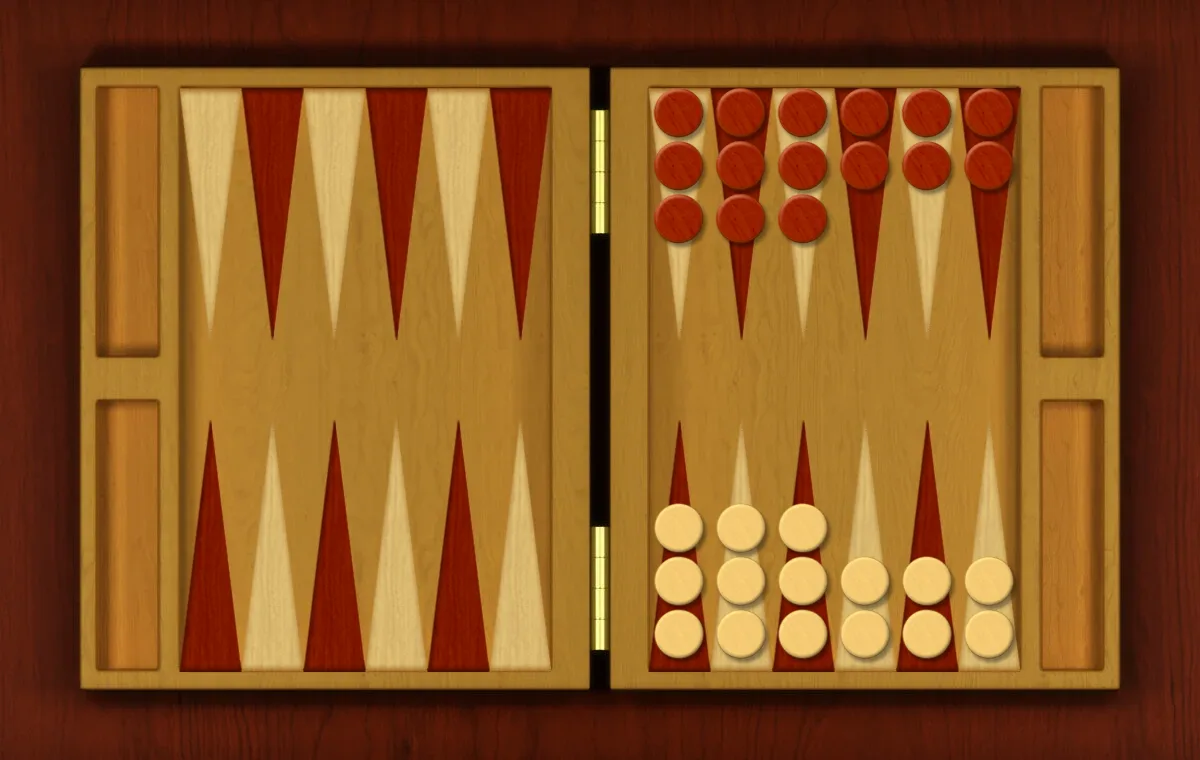
If you finish while your opponent has borne off at least one checker, you win a single point. If they have borne off none, you win a gammon, which counts double.
In multi-game matches this difference matters a lot. Sometimes it is worth playing more defensively to avoid being gammoned, even when the game looks lost.
You must always play both dice if a legal move exists. You cannot choose to play only one die if both are playable. If you can play only one of the two dice, you must play the higher one.
Example: you roll 5-3. You can play the 5 but not the 3 afterward, or the 3 but not the 5 afterward. You must play the 5 (the higher die), even if it leaves you in a worse position. If you cannot play either die, you forfeit your turn.
Special case in bearing off: if your die is higher than the highest occupied point, you bear off from that highest point. Your only checker is on the 3-point and you roll a 5? It bears off from the 3-point.
If you close all 6 points of your home board (1-point through 6-point), the opponent cannot re-enter from the bar. From that moment on, every hit is severely punished: the hit checker simply waits.
The challenge is practical. To close your home board you need 12 checkers (2 per point) across 6 points, so the other 3 must be elsewhere, usually attacking or on the bar.
Even a partially closed home board (4–5 closed points) makes re-entry significantly harder for the opponent. Plan to close your home board before hitting. If you hit with an open home board, the opponent re-enters easily and you have gained nothing.
2 checkers on the 24-point, 5 on the 13th, 3 on the 8th, and 5 on the 6th. The two players move in opposite directions.
Your checker goes to the bar. You must re-enter it on the opponent's side (points 19–24 for the opponent) before making any other move.
If you bear off all your checkers while the opponent has not borne off any, you win a gammon (double victory).
Try what you just read in a real game, solo or online with a friend, straight in your browser.
Start a gameWant the full picture first? The Portes tavli page has rules, strategy and FAQ in one place. Or play tavli online in any variant you prefer.