Tavli Setup: Starting Position with Diagrams
Open the diagrams: Portes, Plakoto and Fevga starting positions as on the real board. Or tap Play — Tavli.net sets it up for you.
Play now PortesOpen the diagrams: Portes, Plakoto and Fevga starting positions as on the real board. Or tap Play — Tavli.net sets it up for you.
Play now PortesA tavli board with 24 points (triangles), 15 white checkers, 15 red (or black) checkers, and a pair of dice. If you play digitally on Tavli.net, the setup is automatic, but it helps to know what each point means.
The board is divided into 4 quadrants of 6 points each. Points are numbered 1–24 from each player's perspective: your point 1 is the opponent's point 24.
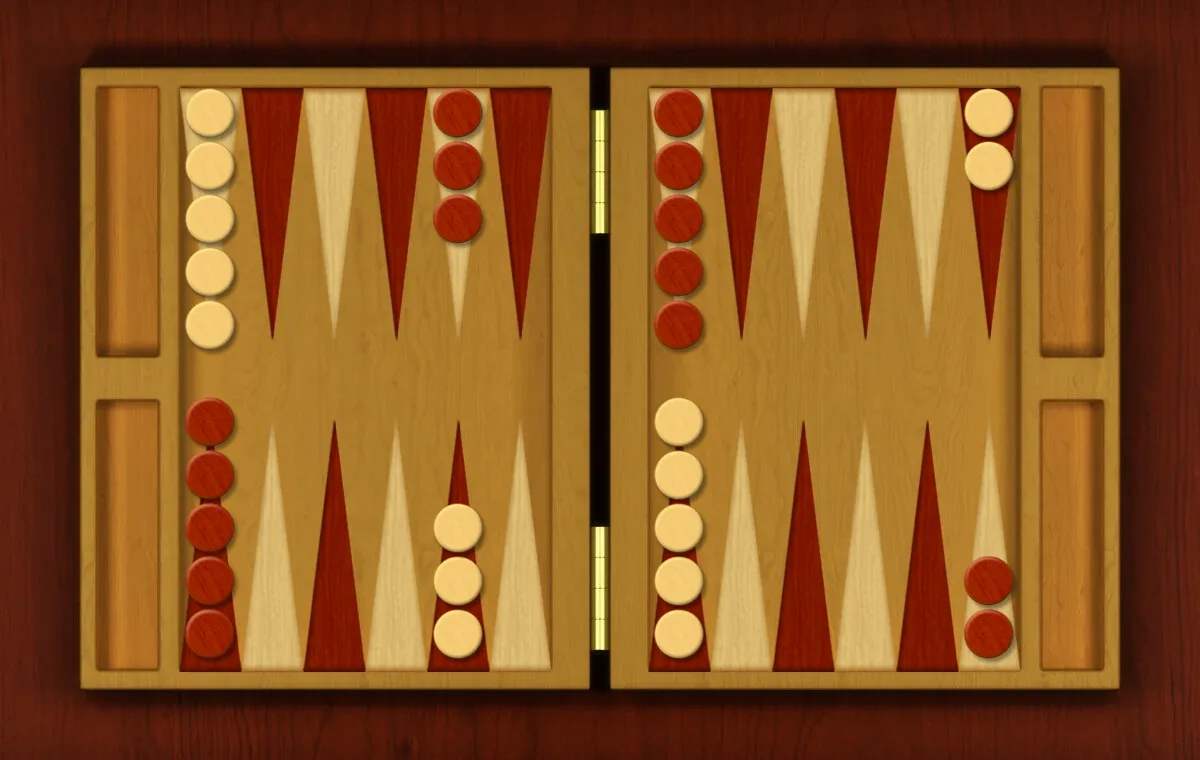
The classic layout starts with checkers spread across the board. Each player places their 15 checkers on 4 points:
The layout is symmetrical: what you do on one side, the opponent mirrors on the other. This spread creates immediate tension. You have checkers both forward and back, and you must decide what to run and what to hold.
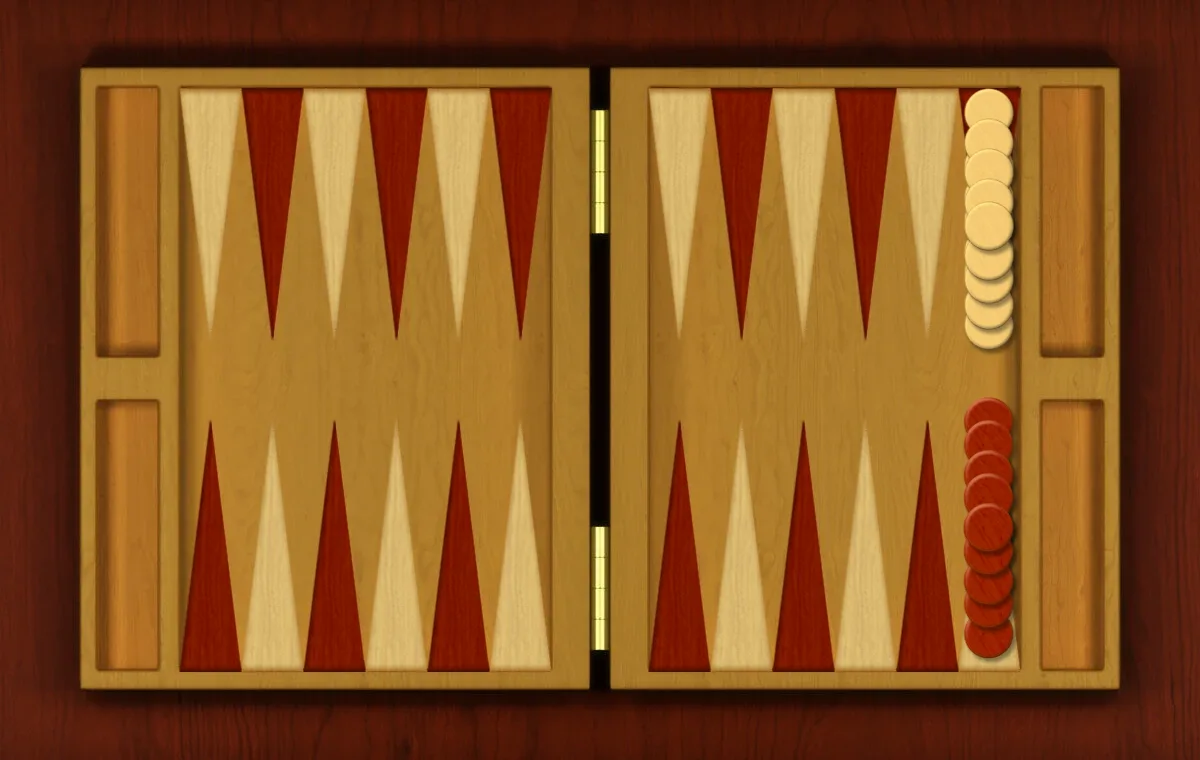
In Plakoto there is no spreading. Both players start with all 15 checkers stacked on the opponent's home point, that is, the opponent's 1-point.
In practice: you start bottom-right, your opponent top-left. You move counter-clockwise. Don't be fooled by the simple setup: all the complexity comes from the pinning.
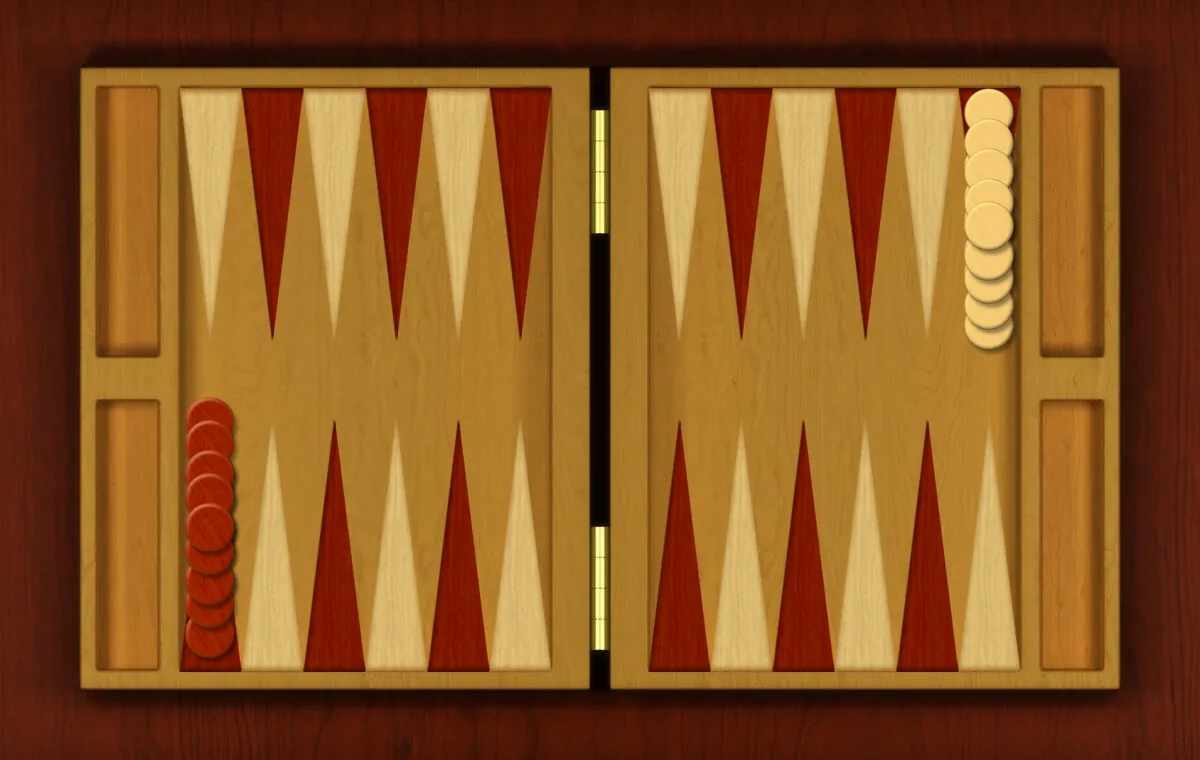
Fevga resembles Plakoto in setup: all 15 checkers start together. White sets up top-right (their 1-point), red sets up bottom-left (their 1-point).
The key difference: both players move in the same direction (counter-clockwise). There is no opposing front. One player chases the other around the board.
In Portes the players move in opposite directions: one goes left, the other right. They meet in the middle and hitting occurs.
In Plakoto the same applies: opposite directions, but instead of hitting there is pinning.
In Fevga both move in the same direction, like runners on the same road. That's why there is no hitting: you never meet head-on.
Each player places 2 checkers on point 24, 5 on point 13, 3 on point 8 and 5 on point 6. The two players set up symmetrically and move in opposite directions.
Each player has 15 checkers, 30 in total on the board. The board has 24 points (triangles), divided into 4 quadrants of 6.
Both players start with all 15 checkers in one stack, on the opponent's home point (their gate), that is, the opponent's 1-point.
All 15 checkers start together: white top-right (their own 1-point), red bottom-left. Both players move in the same direction, counter-clockwise.
Try what you just read in a real game, solo or online with a friend, straight in your browser.
Start a gameWant the full picture first? The Portes tavli page has rules, strategy and FAQ in one place. Or play tavli online in any variant you prefer.